
A vehicle that cannot be made crashworthy must be engineered not to crash
That single constraint separates micromobility from every other vehicle on the road. A car protects its occupants with a steel cage, crumple zones, and airbags. An e-scooter or e-bike can offer none of that – no cage, no crumple zone, nothing between the rider and the pavement. Which means the small vehicle’s safety must come overwhelmingly from one place: preventing the crash before it happens.
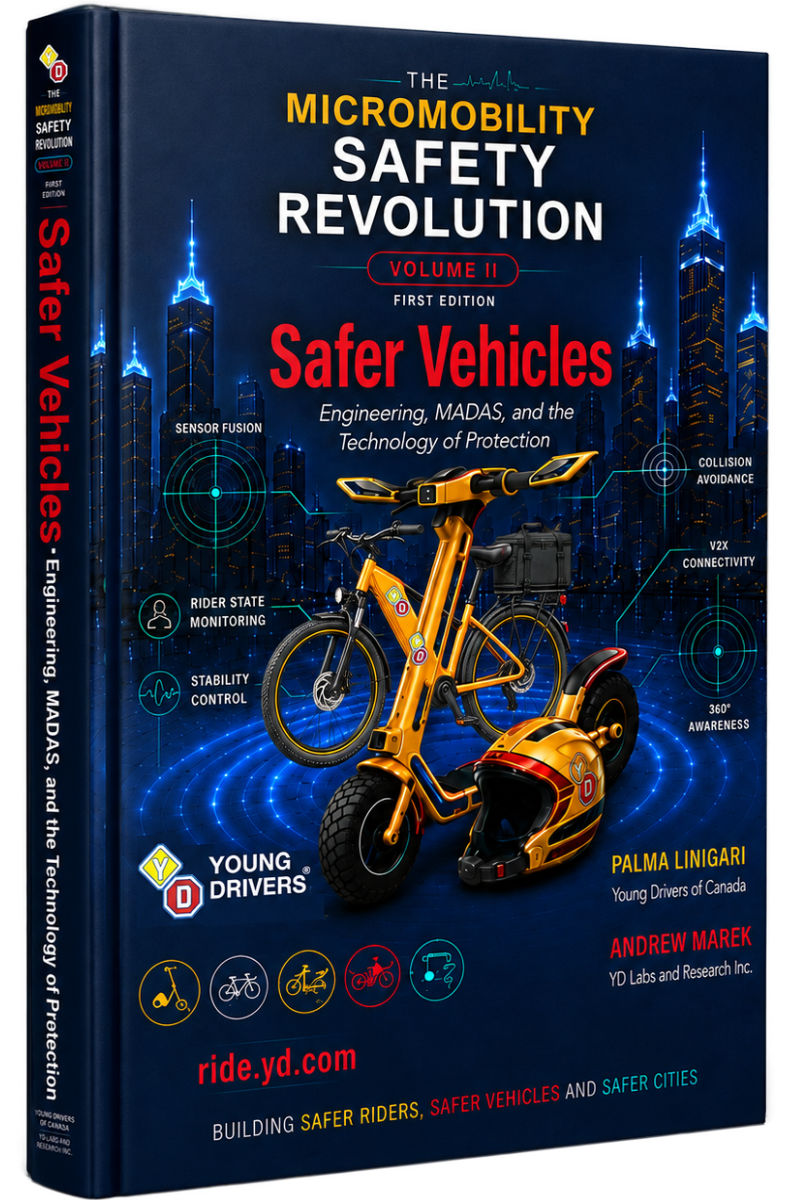
Safer Vehicles is the engineering blueprint for exactly that. At its core is MADAS — Micromobility Advanced Safety Systems — an original Level 0–5 framework that does for small vehicles what the SAE automation levels did for the car: defines a clear ladder of protective capability, from no assistance through active intervention to autonomous accident avoidance, so that buyers, fleets, and regulators can finally see – and demand – what protection a vehicle actually carries.
Chapter by chapter, the volume engineers protection into the machine:
The physical vehicle – how wheel size, geometry, braking, and centre of gravity create or remove risk before any electronics are added, and why no sensor can redeem a poorly designed platform.
Perception – the sensors that give a vehicle eyes, facing outward toward the road’s hazards and inward toward the rider’s own state.
Collision avoidance – why the car’s answer (brake hard, autonomously) is itself dangerous on two small wheels, and how warning and graduated intervention solve the problem the pitch-over dilemma creates.
Stability control – why anti-lock braking prevents the most common crash of all, and why its near-absence from today’s fleet is a market failure the MADAS framework exists to correct.
The frontier – rider-state monitoring, connected V2X safety, predictive AI, and autonomous capability, each examined with the discipline the field too often skips: stated in the conditional, held to evidence, and honest about what remains unproven.
Throughout, one principle holds: technology augments the trained rider – it never replaces one. Machine and rider each catch what the other misses, and a system relied upon must never breed the carelessness it was built to catch.
For manufacturers deciding what to build, fleets deciding what to buy, regulators deciding what to require, and riders deciding what to trust – this is the standard the industry has been missing.
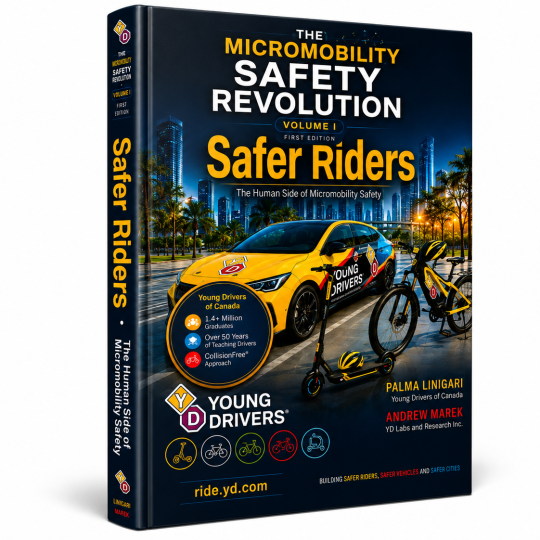
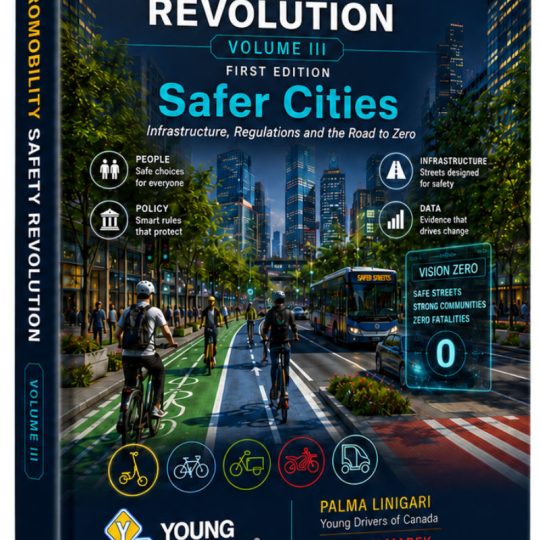
Volume II of The Micromobility Safety Revolution. Volume I equips the rider. Volume III builds the city.